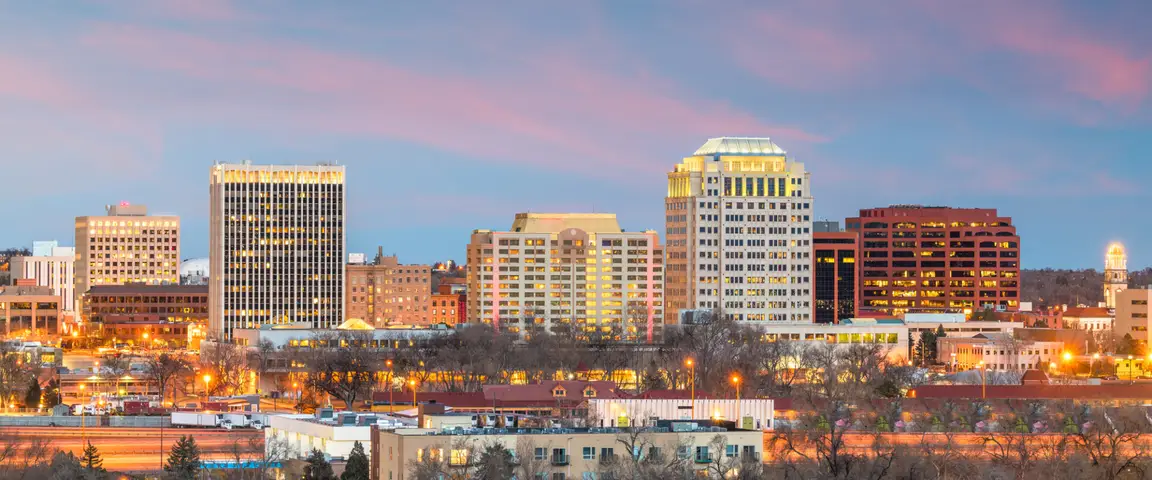

If you drive south from Colorado Springs on Highway 85, past the sprawl of Security-Widefield, you’ll eventually hit a stretch of road where the land opens up, Pikes Peak fills the western sky, and a small-town downtown strip comes into view. That’s Fountain, Colorado — a community that likes to describe itself as having a country vibe with an urban edge. It’s also a town where a lot of longtime homeowners are discovering they can sell their house fast in Fountain without the hassle of a traditional listing, especially those who inherited property here or are managing a home tied to Fort Carson relocations. But long before it was a bedroom community for Colorado Springs, Fountain was a scrappy railroad town carved out of the high plains, built on coal, cattle, and the creek that gave it its name.
A Town Born the Same Year as Denver
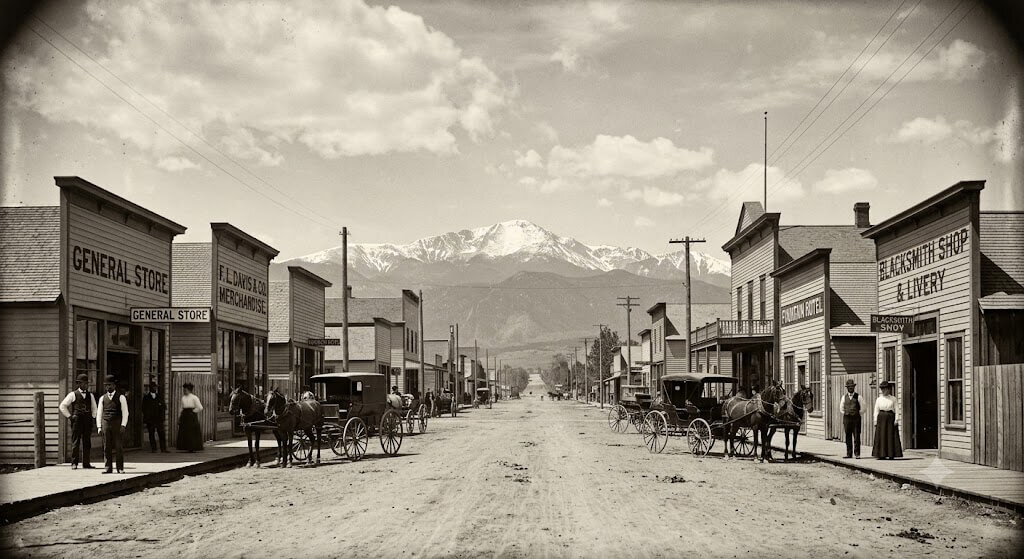
Fountain’s origins go back further than most people realize. The town was founded in 1859 — the same year as Colorado City, Denver, Golden, and Central City. That puts Fountain in the same founding generation as some of Colorado’s most iconic cities, even though it never grew to their size. This was the era of the Pikes Peak Gold Rush, when prospectors and settlers were pouring into the region hoping to strike it rich or simply carve out a new life on the frontier.
The town takes its name from Fountain Creek, the waterway that runs through the valley and eventually joins the Arkansas River down in Pueblo. Water has always been the defining resource of this stretch of Colorado. It’s what made ranching and farming possible in an otherwise dry, wind-scoured landscape, and it’s also what has occasionally turned violent, as later floods would prove.
The very first permanent structure in the area is generally credited to a rancher named John Irvine, who built a ranch house in 1860, just a year after the town’s founding. Irvine was originally from Scotland, and he built his house near a place called Wigwam, just south of what would become Fountain. That original ranch house later became known as the Lincoln Trading Post. What’s remarkable is how it was built: its foundation walls were as much as five feet thick, made from a rock-and-concrete mix, because the structure was designed to double as a fort in case of conflict with Native tribes who were, understandably, resistant to the wave of settlers moving into their territory. Local old-timers used to tell stories of stacks of guns kept inside, left by government scouts for settlers to use if trouble came.
That detail alone tells you a lot about what life was like in the Fountain Valley in those first years. This wasn’t a planned suburb. It was frontier country, and every ranch house doubled as both a home and a potential refuge.
The Railroad Years and a Coal-Shipping Economy
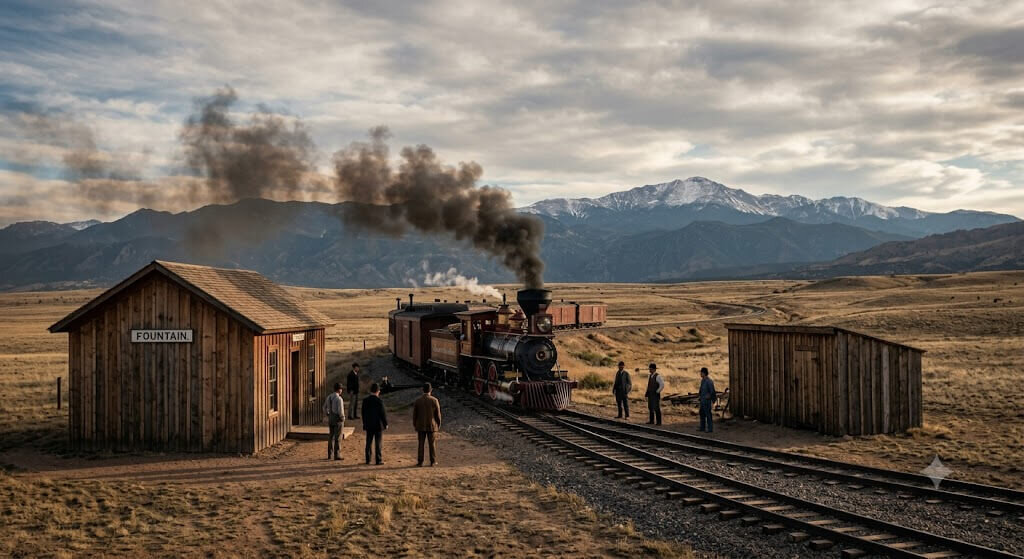
While Fountain traces its founding to 1859, the town’s real identity took shape once the railroad arrived. Fountain was established primarily as a railroad shipping center serving the coal mines in the surrounding region. Coal was one of the major economic engines of the Front Range in the late 1800s, powering everything from home heating to industrial furnaces in Pueblo’s steel mills, and towns that could get that coal onto rail cars and moving to market had a built-in reason to exist.
This is an important detail for understanding Fountain’s character, because it means the town was never purely agricultural, even though ranching and farming were happening all around it. From very early on, Fountain was a transportation and logistics hub — a place where goods, animals, and eventually people moved through on their way to bigger markets in Colorado Springs, Pueblo, and beyond. That dual identity, half agricultural community and half rail town, shaped the built environment. A formal town plat was even submitted in 1871 by early settlers named the Terrells and Isaac Hutchin, laying out streets and lots for what founders clearly hoped would become a proper town rather than just a rail siding. That original plat reportedly showed two churches already planned, one near the corner of Ohio and Race streets and another near Missouri and Main, hinting that community and faith life were part of the town’s DNA from the very beginning.
Ranching Life in the Fountain Valley
Beyond the tracks, the surrounding valley filled in with cattle and sheep operations of real scale. A few miles west of town, the H.B. Ring and Company ranch became one of the valley’s defining agricultural operations. Its main corral stretched 120 feet and included a stable with stalls and feed boxes for 26 dairy cows, plus another set of stalls along the west wall for prize Durham bulls. At its peak, the operation ran 61 cattle, 82 merino rams, more than 3,400 sheep, and 45 head of horses and mules. This wasn’t a hobby farm. It was a serious livestock operation that would have required a small army of ranch hands and represented one of the economic anchors of the entire valley.
Other ranching families left their mark on the landscape too. The Wilson family ran a well-known farmstead in the area, and the Jacksons operated out of Wigwam, the same general area where John Irvine’s original fortified ranch house once stood. Even the tack room on the old Hannah Ranch, located about four miles south of Fountain, survived long enough to become a point of local historical interest.
By the early 1900s, farming and ranching were still the backbone of the valley’s economy, and rural electrification eventually reached the area through several Rural Electric Association organizations, including the Mountain View REA and the Inter Mountain REA, which slowly brought electric light and power to farm homes throughout the region.
Incorporation and Resilience
Fountain’s road to becoming an official, incorporated town wasn’t entirely smooth. The community faced setbacks along the way, but it proved resilient. Fountain was officially incorporated in 1903, which makes it one of the oldest formally incorporated towns in the entire Pikes Peak region — older, in terms of official town status, than many communities that are now far larger.
One of the most dramatic chapters in Fountain’s early history came in 1888, when the town was the site of what locals still refer to as the Great Train Wreck of 1888. Given how central the railroad was to Fountain’s founding and economy, a disaster involving the trains would have been felt deeply by nearly everyone in the community, and the event remains part of local lore to this day. It’s the kind of story that connects directly to the town’s identity as a rail town, and it’s still remembered and discussed by local historians more than a century later.
Fort Carson Changes Everything
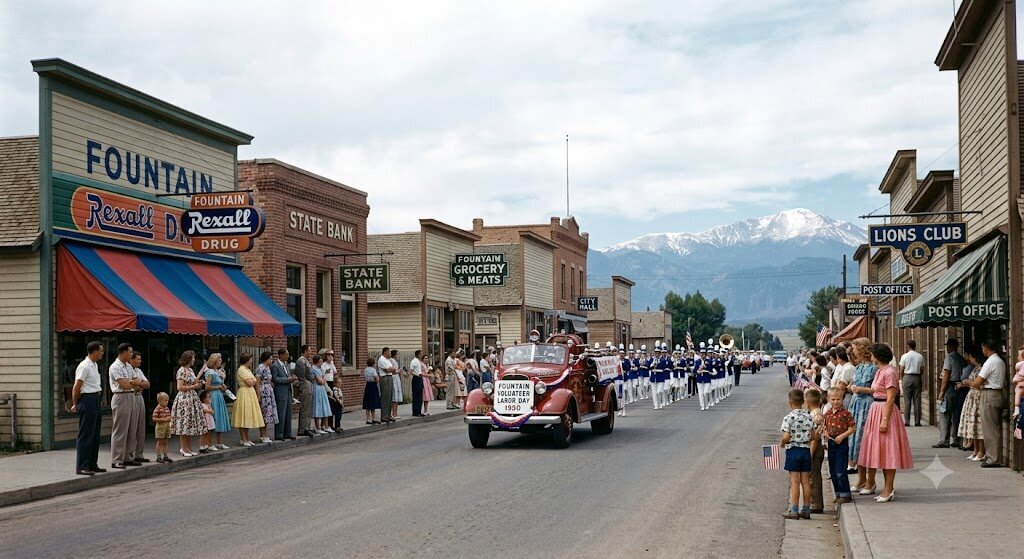
If the railroad explains why Fountain existed in the 1800s, the U.S. Army explains why it grew into the town we recognize today. Fort Carson was established in 1942, and its presence had an outsized influence on Fountain’s growth from that point forward. A massive military installation just to the north brought soldiers, families, jobs, and infrastructure spending that rippled through every community in the surrounding area, and Fountain, sitting close to the base, absorbed a meaningful share of that growth.
This is really the hinge point in Fountain’s history. Before Fort Carson, Fountain was a small, self-contained agricultural and rail community. After Fort Carson, it became something closer to what it is now: a town tightly connected to the broader Colorado Springs metro area, with a population influenced by military families rotating in and out, alongside longtime local families whose roots go back to the original ranches and homesteads.
By 2020, Fountain’s population had grown to 29,802 residents, making it a substantial community in its own right rather than just a rural crossroads. Today it sits at an elevation of 5,545 feet, about 10 miles south of downtown Colorado Springs, and forms part of what locals call the “Fountain Valley” community alongside the neighboring suburbs of Security and Widefield.
Where to See Fountain’s History Today
What makes Fountain interesting for both residents and history buffs is that its past hasn’t been paved over entirely. There are still tangible ways to connect with the town’s founding story.
The Fountain Valley Historical Society and Museum is the obvious starting point. It opened on December 6, 2003, and houses a genuinely impressive collection given the size of the town, including artifacts and stories from the earliest settlers, records on the local schools, an organ that once belonged to the Julie Penrose home, an original stage curtain, and even the town’s first fire hose wagon, alongside materials documenting the 1888 train wreck. It’s a volunteer-run operation located at 114 N Main Street, open Saturdays from 10 a.m. to 3 p.m., and tours can be arranged by appointment.
The Fountain Fairview Cemetery, located at 757 South Santa Fe Avenue, is another quiet but meaningful link to the past. A dedicated preservation society was formed in 2012 after the cemetery experienced vandalism and damage to its headstones, and that group has worked since then to protect the site as a cultural and historical resource, including offering tours and fundraising events.
The Fountain Library is worth a stop too. It maintains a wall display covering historic events, landmarks, and prominent figures from the town’s past, functioning almost like a mini-museum in its own right for anyone who wants a quicker overview than a full museum visit provides.
For anyone who wants to dig even deeper, the blog Historic Fountain Colorado is an extraordinary grassroots archive. It compiles old newspaper clippings from the Fountain Herald going back to 1903, Commercial Club annual reports from 1919, period advertisements, and detailed local history essays covering everything from the original town plat to specific ranching families and their properties. It’s clearly a labor of love from someone deeply invested in preserving the town’s story, and it’s one of the best resources available if you want primary-source-level detail on Fountain’s founding decades.
The City of Fountain’s official “About Fountain” page also offers a concise history alongside contact information for the museum and details on the local mysteries the town still takes pride in, like the legend of the Big Blast and the story of Jimmy’s Camp. And for a broader visitor-oriented overview of the town’s landmarks, parks, and local shops, the Visit Colorado Springs Fountain page is a solid resource for anyone planning to explore the area in person.
Why This History Still Matters
It’s easy to drive through a place like Fountain and see only what’s visible today: newer housing developments, a Walmart, chain restaurants along the highway. But underneath that surface is a genuinely old Colorado town, founded the same year as Denver, built on coal and cattle and creek water, tested by floods and train wrecks, and ultimately reshaped by the arrival of Fort Carson in the 20th century.
For longtime residents, that history is a source of real pride, and it’s part of what gives Fountain a distinct identity separate from Colorado Springs and Security-Widefield, even though the three communities blend together geographically. For newer residents, understanding this backstory is a way of putting down roots in a place that has a lot more depth than it might appear to have at first glance. Whether you’re a lifelong Fountain resident or you just moved into the valley, there’s something worth appreciating in knowing that the ground under your feet has been home to ranchers, railroad workers, soldiers, and small-town families for well over 160 years.